Home Gym Workout: Complete Routine for Beginners at Home
Share
Strength and aerobic activities performed in your home with little to no equipment constitute a home gym workout. Beginners can follow a simple home workout plan of three full-body sessions a week, each lasting 30 to 40 minutes. A mat, a pair of dumbbells and your bodyweight are enough to start.
This guide covers the benefits, equipment, best exercises, a beginner plan, goal-based routines and a seven-day schedule. It also explains how to track progress and what to wear, so you can build a home exercise routine that you can keep for months.
Benefits of Doing a Home Gym Workout
A home gym workout removes the barriers that stop most beginners: travel time, crowded floors and fixed timings. You train when it suits you and in a space you control. The sections below explain the main gains.
Time and Convenience
Working out at home saves you the time you would spend travelling to a gym. You can plan a good 30-minute session in the morning or evening without having to deal with traffic or giving up on your work hours. This also makes it easier to commit to a regular exercise routine..
Privacy and Control
Many beginners feel more at ease practising new movements in private. At home, you can repeat an exercise slowly, check your form in a mirror and set the pace yourself. You also control the music, the temperature and the rest time between sets.
Strength and Fitness Gains
A well-planned home workout routine builds strength, endurance and balance. Bodyweight and light-weight exercises train every major muscle group when done with control. Regular sessions also improve energy, sleep and daily movement.
Regular price
Rs. 1,899.00
Sale price
Rs. 1,499.00
Unit price/ per
Sale
Essential Equipment for a Home Gym Workout
You can start a home gym workout with no equipment at all and add items as you progress. Choose gear that matches your goals and your space, since a home workout plan works best when the equipment fits it. Start small, as a few good pieces cover most exercises.
Home Workouts Without Equipment
Home workouts without equipment use your bodyweight as the load. Squats, push-ups, lunges, planks and glute bridges train the whole body. A full body workout at home without equipment is enough for the first two months, as long as you control each rep and increase the volume gradually.
Use a wall for incline push-ups
Use a sturdy chair for step-ups and supported squats
Use a folded towel under your knees for comfort
Basic Equipment to Start
A small set of equipment adds load and variety. The table below lists the most useful items for a home gym workout and for any home workout plan.
Equipment
Main use
Level
Exercise mat
Floor work and joint comfort
All levels
Adjustable dumbbells
Squats, rows, presses, curls
Beginner and above
Resistance bands
Pulling moves and warm-ups
All levels
Pull-up bar
Back and arm strength
Intermediate
Skipping rope
Cardio and warm-up
All levels
Optional Upgrades
Once your routine is steady, consider an adjustable bench, a kettlebell or a set of heavier dumbbells. These upgrades support heavier lifts and more exercise choices. Add them only when your current weights feel too light for 12 to 15 reps.
Best Home Gym Workout Exercises for the Full Body
These home workout exercises train every major muscle group and form the base of any plan. They are also the basic exercises for beginners at home, since each one is simple to pick up and easy to scale. Each section below groups moves by body area.
Lower Body Exercises
The legs and glutes hold the largest muscles in the body, so they give the biggest return for effort. These moves build strength and support everyday movement.
Bodyweight squats or goblet squats
Reverse lunges
Glute bridges
Step-ups on a sturdy platform
Calf raises
Upper Body Push and Pull
Pushing and pulling moves balance the chest, back and shoulders. Pair a push with a pull in the same session to keep posture even.
Push-ups, from incline to full
Dumbbell or band rows
Overhead dumbbell press
Pike push-ups for the shoulders
Core Exercises
A strong core supports every lift and protects the lower back. Choose controlled holds and slow reps over fast, swinging movements.
Forearm plank
Dead bug
Bird dog
Side plank
Cardio Moves
Cardio raises your heart rate and burns energy. Pick home workout exercises that match your level, and mix short bursts with rest periods. Jumping jacks, high knees, skipping and jogging in place all work in a small space.
Full-Body Home Gym Workout Plan for Beginners
This home workout plan trains the whole body in one session and takes about 35 minutes. Do it three times a week with a rest day between sessions. It works as a full body workout at home for people with no experience. Swap dumbbells for bodyweight moves and it becomes a full body workout at home without equipment.
Exercise
Sets
Reps
Rest
Squat or goblet squat
3
10 to 12
60 seconds
Push-up (incline if needed)
3
8 to 10
60 seconds
Dumbbell or band row
3
10 to 12
60 seconds
Glute bridge
3
12 to 15
45 seconds
Overhead press
2
10
60 seconds
Plank
3
20 to 30 seconds
45 seconds
Warm-Up
A five-minute warm-up raises body temperature and prepares your joints. Use easy movement before any load. Arm circles, hip circles, bodyweight squats and marching in place are enough.
Main Workout
Complete the table in order, finishing all sets of one exercise before moving to the next. Choose a weight that lets you finish every rep with control. Stop a set when your form breaks, even if you have not reached the target reps.
Cool-Down
Finish with five minutes of easy walking and gentle stretching. Hold each stretch for 20 to 30 seconds. Focus on the legs, chest and back. This helps your heart rate settle and eases tightness.
Home Gym Workout for Different Fitness Goals
Your goal decides how you set sets, reps and rest. The same exercises can support fat loss, muscle gain or general fitness with small changes. Use the sections below to adjust your plan.
Home Workout for Weight Loss
A home workout for weight loss combines strength training with regular cardio and a modest calorie deficit. Strength work protects muscle while you lose fat. Add 15 to 20 minutes of cardio after your sessions, or on separate days.
Keep rest periods short, at 30 to 45 seconds
Use circuits that move quickly from one exercise to the next
Add daily walking to raise your total activity
Home Workout for Muscle Gain
A home workout for muscle gain needs heavier loads, steady progress and enough protein. If you want to know how to body build at home, begin with compound lifts and add weight each week. Use 8 to 12 reps per set and rest for 60 to 90 seconds.
Train each major muscle group two times a week
Increase weight or reps once you finish all sets with good form
Eat enough protein and sleep seven to eight hours
General Fitness and Daily Movement
If you want health and energy more than a specific physique, keep sessions moderate and varied. A home exercise routine of three strength days and two light cardio days fits most people. Add short walks and stretching on other days.
Seven-Day Home Gym Workout Schedule
A fixed weekly plan saves you from deciding what to do each day. This seven-day home gym workout plan has three strength days, two light days and two rest days. Treat it as your daily exercise routine at home. Train hard on strength days and keep the other days easy.
Day
Focus
Time
Day 1
Full-body strength
35 minutes
Day 2
Light cardio and stretching
20 minutes
Day 3
Full-body strength
35 minutes
Day 4
Rest or a walk
20 minutes
Day 5
Full-body strength
35 minutes
Day 6
Cardio and core
25 minutes
Day 7
Rest
None
Rest and Active Recovery
Muscles grow and repair during rest, not during training. Take at least one full rest day each week, as every home workout plan needs recovery built in. On light days, walk, stretch or do easy mobility work. This keeps you moving without adding strain.
How to Make Progress With Your Home Gym Workout
Progress comes from small, steady increases. Without a plan, the same session repeated for months stops working. Use these methods to keep improving your home gym workout and your home workout plan.
Progressive Overload
Progressive overload means asking a little more from your muscles over time. Add one or two reps, a small amount of weight or a slower tempo each week. Even small changes build strength across a month.
Add reps first, then weight
Slow the lowering phase to three seconds
Move to harder versions, such as full push-ups
Track Your Workouts
Write down each exercise, weight and rep count after every session. A notebook or phone note is enough. Reviewing your log shows what is working and when to increase the load.
Food and Sleep
Training breaks the muscle down, and food and sleep rebuild it. Eat protein at each meal, drink enough water and sleep seven to eight hours. Without these, your home workout routine delivers less than it should.
Regular price
Rs. 1,899.00
Sale price
Rs. 1,499.00
Unit price/ per
Sale
What to Wear for a Comfortable Home Gym Workout
Clothing affects how well you move and how long you train. In warm Indian homes, light, breathable fabric keeps you cool and dry. Choose pieces that move with you and stay in place.
Breathable Tops
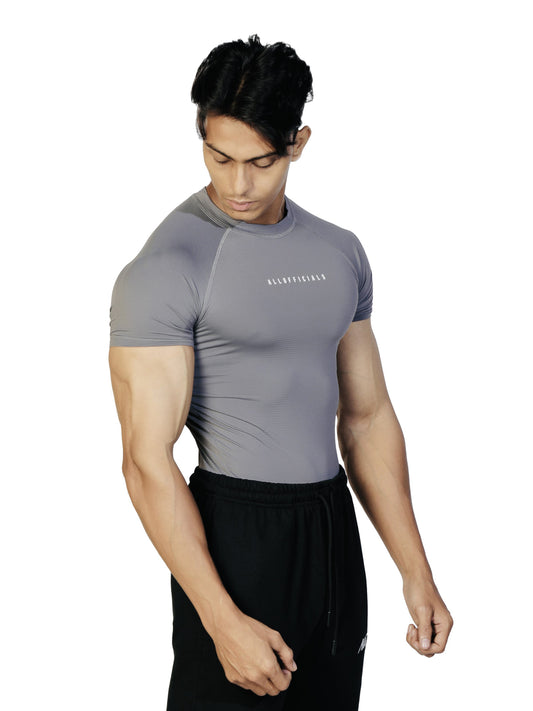
A good top does not stick to the skin or ride up during floor work. Allofficialsgym T-shirts such as the Ultra Light Tee are light and breathable. For more freedom at the shoulders, try ourtank tops and cut-offs.
Shorts and Joggers
Bottoms should allow deep squats and lunges. Ourgym shorts suit hot sessions, and ourjoggers work well for warm-ups and cooler mornings. Both use stretch, sweat-wicking fabric for comfort.
Build a Consistent Home Gym Workout Routine
Consistency matters more than any single session. A home workout plan you can keep will outperform a perfect plan you drop after two weeks. Focus on habits that make the home gym workout automatic.
Fix a Time and a Space
Choose a set time and a clear corner of your home. Keep your mat and weights in view so they act as a reminder. A fixed time turns training into a habit.
Keep the Habit
Build a home exercise routine around three short sessions a week and stay with it for a month. Track each session and reward steady effort. After four weeks, add a fourth day or increase the weights.
FAQs on home gym workout
These answers are short and direct. They cover the main points about training at home.
What is the best home gym workout for beginners?
A full-body routine done three times a week works best. Use squats, push-ups, rows, glute bridges and planks. Keep the weights light and focus on form.
How many days a week should I do a home workout?
Three to four days a week suits most beginners. Leave a rest day between hard sessions. Add light cardio on other days if you want more activity.
Which exercises are best for a home gym workout?
Compound movements give the most return. Squats, lunges, push-ups, rows, presses and planks train most of the body. Add cardio moves such as skipping for conditioning.
What equipment do I need for a home gym workout?
You can begin with none. A mat, a pair of adjustable dumbbells and resistance bands cover most exercises. Add a bench or kettlebell later.
What should I wear for a home gym workout?
Wear light, breathable clothing that stretches and wicks sweat. A fitted tee or tank top and shorts or joggers allow free movement and keep you cool.
Should I do cardio or strength training at home?
Do both. Strength training builds muscle and supports fat loss, while cardio improves heart health and stamina. Begin with strength, then add cardio on separate days or after your session.